















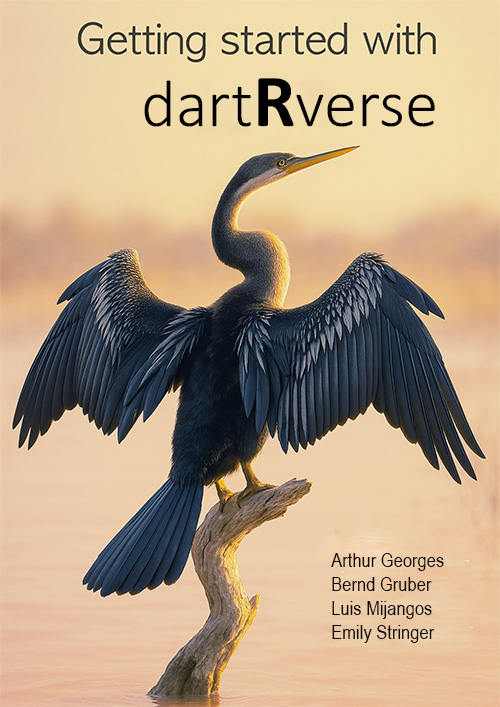
 We are pleased to announce the release of Getting started with dartRverse, a new introductory eBook designed to help users begin working confidently with SNP data in the dartRverse environment. Authored by the members of the Core Development Team and Emily Stringer, this first volume in the Biomatix Technical Series provides a structured, practical entry point for students, researchers and practitioners who want to move from raw genotype data to sound exploratory analysis in R using the dartR environment (dartRverse).
Why this eBook, and why now? We are living through an extraordinary period in population genomics. Sequence data are accumulating rapidly across the tree of life, while analytical tools are expanding just as quickly. That combination creates enormous opportunity, but it also creates a barrier for newcomers: where do you begin, and how do you proceed in a way that is both rigorous and reproducible? This eBook was written to provide that gentle but practical start to a package, dartRverse, designed to smooth the path.
The eBook focuses on reduced-representation sequencing and the use of single nucleotide polymorphisms (SNPs) to represent genome-wide variation. It takes readers step by step through the early stages of working with genomic data in R: setting up and using RStudio, learning enough R programming to be productive, reading data into dartRverse, manipulating datasets, filtering markers, and carrying out exploratory visualisation with PCA. The volume also includes integrative exercises to help readers consolidate both concepts and practical skills.
A major strength of this resource is that it is not just a static text. The eBook is supported by dynamic elements including worked examples, exercises, and AI-generated podcast overviews for the chapters. We hope that this will provide a rich learning environment that can evolve over time behind the eBook text itself.
The design draws on experience from workshops, a CAUT-funded project on self-paced learning modules, and feedback from the dartR user community, with the aim of helping readers not just follow instructions, but build lasting understanding through guided practice and problem solving.
The eBook also comes with a strong endorsement from the broader dartR community. In the foreword, Oliver Berry notes both the global uptake of dartRverse since its inception only a few years ago. This uptake was recognised in 2025 with the ARDC Eureka Prize for Research Software. The Award highlighted the importance of open, community-driven software for tackling challenges in biodiversity, agriculture, environment and health. Olly Berry describes this eBook as the starting point for users who want to turn large genomic datasets into biological insight.
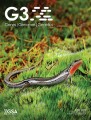
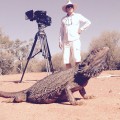
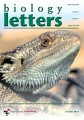
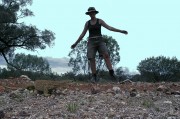
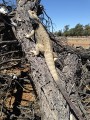
Although introductory in scope, the eBook is written with real applications in mind. The worked examples and exercises draw on authentic biological datasets, including material from the Canberra grassland earless dragon, to illustrate how the analytical ideas translate into practice. The goal is not simply to introduce software commands, but to help users develop a workflow for thinking clearly about data quality, filtering choices, structure in the data, and the biological questions that follow. The user maintains control over the analysis workflow by daisy-chaining functions in the dartRverse, each with a well-defined and specific role, to construct a workflow that remains transparent and fit for purpose.
Developers, researchers and educators are invited to provide datasets and context for additional worked examples or exercises to better align the eBook with their courses at graduate or undergraduate levels. We are aware of the use of dartRverse in undergraduate teaching at various universities. Microcredentials spring to mind?
For you, this eBook is very much an opening step rather than a final destination. Getting started with dartRverse is intended to lower the barrier to entry, provide a reliable foundation, and prepare readers for more advanced analyses to come. We hope it will be useful to people working across conservation biology, fisheries, forestry, agriculture, ecology and related fields, and that it will encourage more researchers to engage confidently with genomic data in an open and reproducible framework.
We hope you enjoy working through the eBook. Feedback welcome through the dartR Google Group.
Specific enquiries can be directed to the dartRverse Core Development Team.
